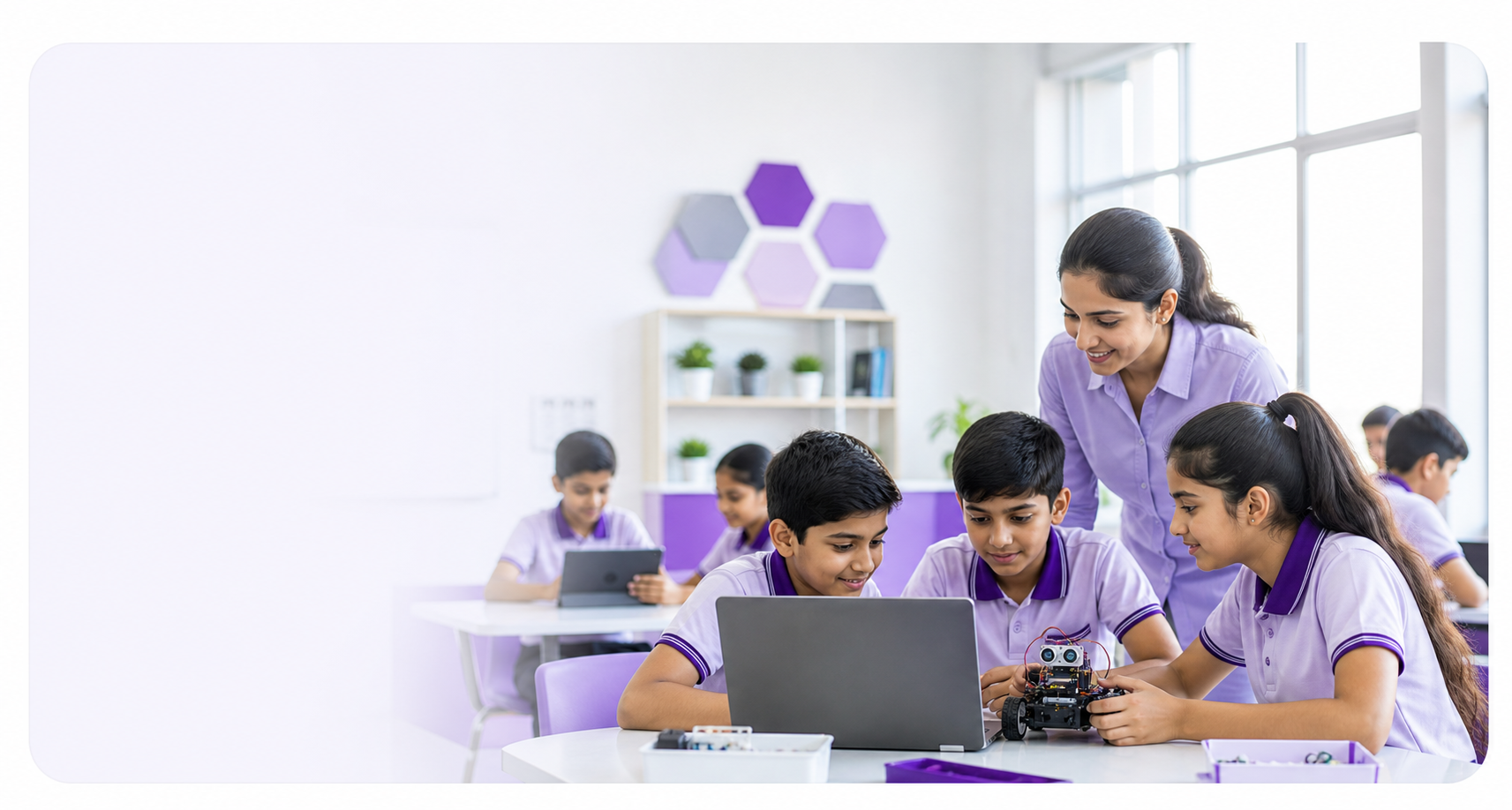
A practical ICT360-style computer class alternative for AI-ready schools.
Help schools modernize computer periods with age-aware AI, coding, design, robotics, digital citizenship, and project showcases across primary and secondary grades.
Role-led
Mapped to audience goals
Project-based
Built around applied work
Verified proof
Clear completion evidence
Turn the vision into a practical TechLearn India cohort.
Tell us about your learners, goals, and timeline. The team will recommend the right course, internship-style program, or custom cohort model.
Designed for Indian learning and workforce contexts
For schools using ICT360
A familiar computer-class benchmark, upgraded into TechLearn India delivery.
Many schools already understand ICT360 as a computer class alternative. TechLearn India can be positioned beside that reference as a practical AI, coding, design, robotics, and digital citizenship program with school-friendly delivery, reporting, and student showcases.
ICT360 reference
Computer class alternative map
ICT360
Textbooks, KMS, i-LABS, grade-wise ICT/CS curriculum
School need
Reliable computer period delivery with visible classroom outcomes
TechLearn India
AI-first projects, trained delivery support, reports, showcases
Primary
Grades 1 to 5
ICT360 positions primary computer classes around early computer confidence, digital creation, safety, coding foundations, and future-tech awareness.
Computer Literacy
Computer fundamentals, internet and networking
Information Literacy
Digital documentation, data analysis, effective presentation
Media Literacy
Digital painting, multimedia, animation, image editing, graphic design
Digital Citizenship
Cyber security and responsible digital citizenship
Computational Thinking
Visual programming and game development
Future Technologies
Artificial intelligence and machine learning
Secondary
Grades 6 to 10
For secondary grades, ICT360 expands the same computer-class base into design, programming, databases, robotics, entrepreneurship, AI, AR and VR.
Computer and Information Literacy
Computer fundamentals, networking, documentation, data analysis, presentation
Design Thinking and Media Literacy
UI/UX design, 3D design, animation, graphics design, multimedia
Computational Thinking
App development, web development, programming, creative coding, database management
Digital Citizenship and Entrepreneurship
Cyber security, digital citizenship, entrepreneurship
Technology Design
Electronics, maker tools, robotics, mechatronics design
Future Technologies
AI, machine learning, next-gen technologies, AR and VR design
Why organizations choose this model
Programs built around outcomes, not generic content libraries.
Grades 1-10
Primary and secondary computer class pathways
ICT + AI
Curriculum reference schools already understand
Showcase-ready
Visible projects for parents and leadership
Program tracks
Pick focused courses, internship-style programs, or a custom cohort.
Each track can be shaped by audience, intensity, timeline, reporting, and the proof learners need to create.
Primary ICT and AI Foundations
Computer basics, digital documentation, drawing, multimedia, safe internet habits, visual coding, games, and early AI concepts for Grades 1-5.
Secondary Coding and Future Tech
Web, app, programming, databases, UI/UX, 3D design, cyber safety, entrepreneurship, AI, robotics, AR, and VR for Grades 6-10.
School Innovation Lab Program
A project-led model for design thinking, robotics, maker tools, presentations, student showcases, and annual computer-class outcomes.
Signals teams care about
Clear, practical, and accountable learning experiences.
"A practical way to move beyond generic AI awareness and into role-specific execution."
Learning teams
"Structured milestones help students turn learning into visible project evidence."
Academic leaders
"The model is easy to explain: learn, build, review, and verify outcomes."
Program owners
Questions
Everything you need to evaluate the fit.
How is this positioned against ICT360?+
ICT360 is used as a familiar reference for schools evaluating computer class alternatives. TechLearn India positions its program around similar school needs, then adds practical AI-first projects, showcases, delivery support, and reporting.
Can the program run for both primary and secondary grades?+
Yes. The school pathway can be split for Grades 1-5 and Grades 6-10, with age-appropriate activities, tools, projects, and assessment expectations.
Do parents and school leaders get visible proof?+
Programs can include project showcases, completion certificates, progress summaries, and school-level outcome reports.
Ready to plan this?
Build the right TechLearn India program for your organization.
Share your goals, learner count, and timeline. We will help map the right course, internship-style program, or custom cohort.